
- April 29, 2026
- 1069
- Business
Quick Answer
To open a bank account in Dubai, you need a valid passport, an Emirates ID (for residents), a UAE residence visa, and proof of address. Residents can open an account in 1–3 business days — or instantly via digital banks like Wio Bank or Mashreq Neo. Non-residents can open a savings account by visiting a branch with a passport and home country bank statements. The process is free, but most banks require a minimum monthly balance of AED 3,000–25,000.
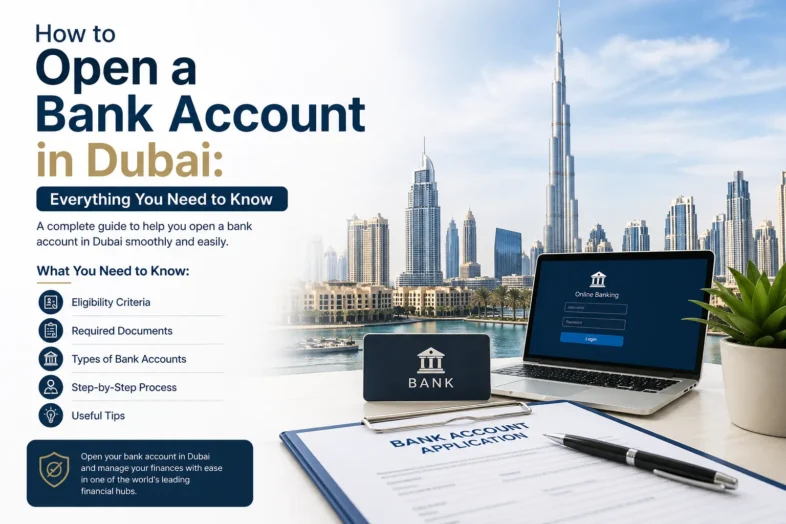
Moving to Dubai or starting a business here? A local bank account is one of the first things you need. Without one, you cannot receive your salary, pay rent, open a business, or handle daily expenses properly.
Dubai has over 50 banks — local, international, Islamic, and fully digital. Knowing which one to choose, what documents to prepare, and what mistakes to avoid can save you weeks of frustration. This guide gives you everything, including what most other guides leave out.
Why You Need a Dubai Bank Account
Many newcomers think they can manage with their home-country bank account or international cards. In practice, this creates serious problems very quickly. Here is what you cannot easily do without a UAE bank account:
- Receive your salary: The UAE’s Wage Protection System (WPS) legally requires employers to pay salaries through UAE-registered banks. Without a local account, you cannot receive your salary legally.
- Pay rent: Most Dubai landlords require post-dated cheques for rent — something only a UAE bank account with a chequebook can provide.
- Open a business: A corporate bank account is required to operate a registered company in the UAE.
- Register for UAE services: Government services, utility bills, and DEWA accounts all require a linked UAE bank account.
- Build credit history: Credit cards, car loans, and mortgages all require a UAE banking history.
- Avoid transfer fees: International transfers cost 3–6% per transaction. A local account eliminates this for daily spending.
💡 Pro Tip: Open your bank account as soon as your Emirates ID is registered — even before it is physically delivered. Most banks accept the Emirates ID application receipt as a temporary substitute.
Types of Bank Accounts in Dubai
Choosing the right account type from the start saves you fees and avoids restrictions later. Here is a clear breakdown:
| Account Type | Best For | Chequebook | Interest | Min. Balance | Non-Residents |
|---|---|---|---|---|---|
| Current Account | Daily transactions, bill payments, rent | ✓ Yes | No | AED 3,000–25,000 | ✗ Not available |
| Savings Account | Saving money, earning interest | No | ✓ Yes | AED 1,000–10,000 | ✓ Available |
| Salary Account | Employees receiving monthly salary via WPS | Sometimes | No | No minimum (usually) | ✗ Not available |
| Joint Account | Married couples or business partners | ✓ Yes | Varies | Varies by bank | Both must be in UAE |
| Fixed Deposit Account | Locking funds for higher interest rates | No | ✓ Higher rate | AED 5,000+ | ✓ Available |
| Islamic Account | Sharia-compliant banking (profit-sharing, no interest) | ✓ Yes | Profit-share | Varies | Varies |
| Corporate Account | Registered businesses and companies | ✓ Yes | Sometimes | AED 25,000–250,000 | Employees receiving a monthly salary via WPS |
📌 Key Rule for Non-Residents: If you do not have a UAE residence visa, you can only open a savings account — not a current account. A current account in Dubai requires a valid UAE visa and Emirates ID. There are no exceptions to this.
Best Banks in Dubai (2026 Comparison)
Dubai has over 50 licensed banks. Here are the most popular and most reliable options for expats, residents, and non-residents :
Emirates NBD
🏆 Largest UAE Bank — Best Overall
- Most trusted local bank
- Strong mobile app
- International transfer via RippleNet
- Non-resident savings available
- Crypto custody partnerships
Min. Balance: AED 3,000–50,000 (varies by account)
Mashreq Bank
⭐ Most Innovative — Best for Digital
- Named the UAE’s most innovative bank
- Mashreq Neo: zero-balance digital account
- Best for non-residents — most accessible
- Multilingual app
- Fast international transfers
Min. Balance: AED 0 (Neo) to AED 100,000 (Priority)
HSBC UAE
🌍 Best for International Transfers
- Global banking connectivity
- Popular with high-net-worth expats
- Strong wealth management
- Multi-currency accounts
- Non-resident accounts available
Min. Balance: AED 25,000–250,000
Dubai Islamic Bank (DIB)
☪️ Best for Sharia-Compliant Banking
- World’s first full-service Islamic bank
- No interest — profit-sharing model
- Fully Sharia-compliant products
- Wide branch network
- Online account opening
Min. Balance: AED 3,000 (basic accounts)
RAKBANK
💰 Best for Low Minimum Balance
- No minimum balance savings accounts
- Friendly to non-residents
- Easy international transactions
- Simple documentation
- Good for freelancers
Min. Balance: AED 0 (some accounts)
Standard Chartered UAE
💼 Best for Wealth Management
- Premium and priority banking
- Popular with high-net-worth individuals
- Multi-currency accounts
- Strong investment products
- International network
Min. Balance: AED 100,000+ (priority banking)
| Bank | Non-Residents | Digital Account | Islamic Option | Min. Salary | Best For |
|---|---|---|---|---|---|
| Emirates NBD | ✓ Yes | ✓ Yes | ✓ Yes | AED 3,000 | Overall best, most trusted |
| Mashreq Bank | ✓ Yes | ✓ Yes | No | AED 0 (Neo) | Digital-first users |
| HSBC UAE | ✓ Yes | Partial | No | AED 10,000 | International transfers |
| Dubai Islamic Bank | Limited | ✓ Yes | ✓ Full | AED 3,000 | Sharia-compliant banking |
| RAKBANK | ✓ Yes | Partial | No | AED 0 (some) | Low-balance, non-residents |
| First Abu Dhabi Bank | ✓ Yes | ✓ Yes | ✓ Yes | AED 5,000 | Abu Dhabi-based businesses |
| Standard Chartered | ✓ Yes | Partial | No | AED 10,000 | High-net-worth expats |
Digital Banks in Dubai: The Fastest Option in 2026
One major gap in most competitor guides: they completely ignore digital-first banks. In 2026, digital banks are often the smartest choice for new residents — especially those who want to avoid branch visits and minimum balance requirements.
| Digital Bank | Backed By | Min. Balance | Account Opening | Best Feature |
|---|---|---|---|---|
| Wio Bank | ADQ, Alpha Dhabi, e& (Etisalat) | AED 0 | Minutes via app | UAE’s first platform bank — zero fees, instant setup |
| Liv | Emirates NBD | AED 0 | Minutes via app | Best for millennials — social features, easy transfers |
| Mashreq Neo | Mashreq Bank | AED 0 | Minutes via app | Zero minimum balance, fully digital onboarding |
| YAP | RAK Bank | AED 0 | Minutes via app | Prepaid digital account, no credit checks |
📌 2026 Update: From January 2026, UAE banks are phasing out SMS verification for transactions. You must now use your bank’s official app to authenticate all transactions. Make sure to download and set up your bank app immediately after account opening.
Step-by-Step: How to Open a Bank Account in Dubai as a Resident
If you have a UAE residence visa and an Emirates ID, this process is straightforward. Follow these steps in order:
- Choose Your Bank and Account Type. Decide between a local bank (Emirates NBD, Mashreq), an international bank (HSBC, Standard Chartered), an Islamic bank (DIB), or a digital bank (Wio, Liv). Match your choice to your needs — salary account, savings, or current account.
- Prepare Your Documents: Collect your original passport, Emirates ID (or application receipt), UAE residence visa copy, and any employment documents. For a salary account, also get your salary certificate or employment letter. See the full document checklist in Section 7.
- Apply Online or Visit a Branch. For digital banks (Wio, Liv, Mashreq Neo): download the app and complete the process entirely on your phone — no branch visit needed. For traditional banks: apply online to pre-fill your application, then visit a branch for identity verification. Most banks now offer appointment booking through their app.
- Complete KYC Verification. KYC (Know Your Customer) is the bank’s identity and background check. For digital banks, this is done via selfie and document scan. For branches, the bank officer reviews your original documents. Be honest about your source of income and employment — inconsistencies are the top reason for rejection.
- Make the Initial Deposit (If Required)Some accounts require an initial deposit when opening — typically AED 1,000–5,000. Digital banks and salary accounts usually have no initial deposit requirement. Check your specific account’s terms before visiting.
- Receive Your Account Details and Debit Card. Once approved, you will receive your IBAN and account number immediately (or within 24 hours for digital banks). Your debit card is typically mailed within 3–7 business days, or available for immediate pickup at some branches. Set up your banking app right away.
- Request a Chequebook (If Needed)If you will be renting property in Dubai, you will need a chequebook to pay rent. Request one at account opening — your first chequebook is usually free. It arrives by mail in 5–10 business days. Without a UAE chequebook, most landlords will not accept you as a tenant.
How Non-Residents Can Open a Bank Account in Dubai
This is the section most guides get wrong or skip entirely. The truth is: non-residents can open a bank account in Dubai — but with important restrictions and requirements.
⚠️Key Rule: Non-residents can only open a savings account — not a current account. A current account requires a UAE residence visa and an Emirates ID. No exceptions in 2026.
What Non-Residents Can Get
- Savings accounts with debit card access
- Fixed deposit accounts
- Multi-currency accounts (AED, USD, EUR, GBP)
- Online banking and international SWIFT transfers
- No chequebook (chequebooks are for current accounts only)
Step-by-Step: Non-Resident Account Opening
- Get a UAE Entry Stamp First. Your passport must have a valid UAE entry stamp or tourist visa. This is non-negotiable for every bank in 2026. Plan to stay at least 5–7 working days to complete the process.
- Choose a Non-Resident-Friendly Bank. Not every UAE bank accepts non-residents. The most accessible options are: Mashreq Bank (most open, simple requirements), Emirates NBD (Non-Resident Nile Account), RAKBANK (lower minimum balance requirements), HSBC UAE, and First Abu Dhabi Bank (FAB).
- Pre-Apply Online Before Your Visit. Most banks (especially Emirates NBD) have online pre-application forms. Complete this before arriving in Dubai. This does not replace the branch visit — it only pre-screens your application and saves time.
- Visit the Branch With Your Full Document Package. You must visit a branch in person for identity verification. There is no fully remote option for non-residents at UAE-registered banks. Bring all documents (see Section 7) — incomplete documents are the top reason for delayed or rejected applications.
- Deposit the Minimum Required Balance. Non-resident accounts typically require higher minimum balances than resident accounts. Expect AED 25,000–100,000 depending on the bank and account tier. RAKBANK and some Mashreq accounts have lower thresholds — some starting from AED 3,000.
⚠️ What No One Tells You: Many websites claim you can open an Emirates NBD account “fully remotely from outside the UAE.” This is misleading in 2026. While Emirates NBD does have an online form, non-resident applications still require branch verification for KYC compliance. The online form is a pre-screening tool, not a complete remote process.
Documents Required to Open a Bank Account in Dubai
| Document | Residents | Non-Residents | Notes |
|---|---|---|---|
| Valid Passport (original) | ✓ Required | ✓ Required | Must be valid for 6+ months. Original needed for verification. |
| Emirates ID | ✓ Required | ✗ Not applicable | Application receipt accepted if ID not yet received. |
| UAE Residence Visa | ✓ Required | ✗ Not applicable | Visa page in passport or copy stamped by authorities. |
| UAE Entry Stamp / Tourist Visa | Not needed | ✓ Required | Must be valid at time of branch visit. |
| Salary Certificate / Employment Letter | For salary accounts | Sometimes required | On company letterhead, signed and stamped. |
| Proof of Address (UAE) | Sometimes required | ✗ Not applicable | DEWA bill, Ejari, or recent bank statement showing address. |
| Proof of Address (home country) | Not needed | ✓ Required | Utility bill or bank statement (within 3 months). |
| 3–6 months bank statements (home country) | Not usually required | ✓ Required | Shows financial history and source of funds. |
| NOC from employer / sponsor | Sometimes required | ✗ Not applicable | Some banks require this for employed residents. |
| Passport-size photograph | Sometimes required | Sometimes required | White background, recent. |
| Source of funds declaration | For large deposits | ✓ Often required | Explains where your money comes from — bank requirement for KYC. |
Fees, Minimum Balance & Hidden Charges Explained
Opening a bank account in Dubai is free. But running one has costs that many guides do not explain clearly. Here is the full picture:
| Fee Type | Typical Cost | When It Applies |
|---|---|---|
| Account opening fee | AED 0 | Never — opening is always free |
| Monthly maintenance fee | AED 25–100/month | Only if balance falls below minimum |
| Minimum monthly balance (residents) | AED 3,000–25,000 | Must be maintained to avoid fees |
| Minimum monthly balance (non-residents) | AED 25,000–100,000 | Higher requirements for non-residents |
| Chequebook (first one) | AED 0 (free) | Additional chequebooks: AED 25–50 |
| Debit card annual fee | AED 0–100 | Some banks charge annual card fees |
| International wire transfer | AED 25–100 per transfer | Per outgoing international transfer |
| ATM withdrawal (own bank) | AED 0 | Free at your own bank’s ATMs |
| ATM withdrawal (other banks in UAE) | AED 2–5 | Per transaction at non-home bank ATMs |
| Cheque bounce penalty | AED 100–1,000+ | Every bounced cheque — plus possible criminal charges |
| Account closure fee | AED 0–500 | If closing within the first 6 months at some banks |
💡 How to Avoid Monthly Fees. The simplest way: keep your balance above the minimum at all times, or arrange a salary transfer to your account. Most UAE banks waive all monthly maintenance fees if you have a regular salary transfer — even for accounts that normally have a minimum balance requirement.
How to Open a Corporate Bank Account in Dubai
Opening a corporate bank account is significantly more complex than a personal account. UAE banks apply strict KYC and anti-money-laundering checks on all businesses. Never use a personal account for business transactions — this can cause immediate account suspension and legal complications.
Documents Required for a Corporate Account
- Valid trade license (must be active — not expired)
- Certificate of Incorporation
- Memorandum and Articles of Association (MOA/AOA)
- Passports of all shareholders and directors
- Emirates ID of all shareholders and directors (if UAE residents)
- Residence visas of all shareholders (if applicable)
- Board Resolution authorising the account opening (signed by all directors)
- Proof of registered business address (Ejari or Free Zone lease)
- Comprehensive business plan (required by most banks)
- Source of funds declaration
- Existing contracts or client letters (if available)
- Reference letters from business partners (some banks require this)
- Company bank statements from the home country (for foreign-origin companies)
| Factor | Personal Account | Corporate Account |
|---|---|---|
| Documents required | 3–5 documents | 10–15+ documents |
| Processing time | 1–3 days (residents) | 2–6 weeks |
| Minimum balance | AED 3,000–25,000 | AED 25,000–250,000 |
| Business plan required | No | Yes — most banks require it |
| Interview with bank | No | Yes — compliance interview required |
| Rejection rate | Low | Higher — especially for new companies |
⚠️ Corporate Account Reality Check: Many new business owners are surprised to find that having a valid UAE trade license does not guarantee a corporate bank account. Banks can and do reject applications from new companies with no transaction history. Having a strong, detailed business plan and evidence of existing clients or contracts significantly improves your approval chances.
Salary Accounts and the WPS System Explained
The Wage Protection System (WPS) is a UAE government initiative that requires all employers to pay salaries electronically through registered UAE banks. Understanding WPS is essential for every employee in Dubai — and no competitor guide explains it properly.
What WPS Means for You
- Your employer must pay your salary via WPS, through a registered UAE bank to your bank account. Paying in cash is not compliant.
- WPS transfers unlock better banking benefits — lower fees, easier credit access, and preferential interest rates.
- WPS salary transfer = minimum balance waived — most banks waive the monthly maintenance fee entirely for accounts that receive regular WPS salary transfers.
- Credit card eligibility — most UAE credit cards require a minimum salary of AED 5,000–8,000 transferred via WPS.
- Loan eligibility — personal loans and mortgages require 3–6 months of consistent WPS salary history at the same bank.
📌 Tip: Before choosing your bank, ask your employer which bank they use for WPS salary transfers. If your company uses Emirates NBD, opening your account there means instant salary access — and potentially better loan terms later. Some companies have negotiated special banking packages for their employees.
Why Banks Reject Applications — And How to Avoid It
Rejection is more common than people expect, especially for non-residents and corporate applications. Here are the real reasons banks say no:
| Rejection Reason | How to Avoid It |
|---|---|
| Incomplete documents | Bring originals AND copies of every document. Call the bank beforehand to confirm the exact checklist. |
| Suspicious or unclear source of funds | Prepare a clear, written source-of-funds declaration. Bring supporting documents (payslips, contracts, investment records). |
| Saying “looking for work” during the interview | This is a red flag for banks. If you are between jobs, explain your financial situation clearly and show proof of savings or income from abroad. |
| Previous account blocked for suspicious activity | Disclose this proactively and explain the circumstances. Hiding it leads to immediate rejection. |
| Being on a restricted persons list | Banks share blacklist data with the Central Bank. If flagged, you may need legal assistance to resolve it. |
| High-risk nationality or profession | Some nationalities and professions face extra scrutiny due to international regulations. Bring extra supporting documentation and consider hiring a bank introduction consultant. |
| New company with no business history | For corporate accounts — have a solid business plan, show existing contracts or LOIs, and demonstrate initial capital. |
| Expired or soon-expiring visa | Renew your visa before applying. Most banks want a visa with at least 6 months of validity remaining. |
The 8 Costly Mistakes to Avoid When Opening a Bank Account in Dubai
- ❌Using a personal account for business transactions. This violates UAE banking regulations and can result in immediate account freezing and potential legal action. Always keep personal and business finances completely separate from day one.
- ❌Bouncing a cheque. In Dubai, a bounced cheque is a criminal offence — not just a financial inconvenience. You can face fines, a travel ban, and even imprisonment. Never issue a cheque unless you are 100% certain the funds are available.
- ❌Ignoring the minimum balance requirement. Many people open an account, transfer most of their money elsewhere, and then get hit with monthly penalties. Know your minimum balance before you open — and set a phone alert if your balance gets close to the limit.
- ❌Not updating your bank when your visa is renewed. Banks require updated visa copies when you renew your UAE residence visa. Failing to provide this can result in account restrictions. Update your documents immediately after every visa renewal.
- ❌Leaving the UAE without properly closing your account. Abandoning a bank account when you leave Dubai does not close it. Monthly fees continue to accumulate, and the bank can report you to the Al Etihad Credit Bureau — damaging your credit record and potentially causing issues when re-entering the UAE.
- ❌Choosing a bank based only on branch proximity. The branch closest to you may not be the best fit for your financial needs. Consider minimum balance requirements, international transfer fees, and digital banking quality — all factors that matter far more day-to-day than branch location.
- ❌Not setting up your banking app before needing it. From January 2026, SMS-based authentication has been phased out. All transaction verification now goes through the bank’s official app. Download and set up your app the same day your account opens — not when you urgently need to make a transfer.
- ❌Applying at the wrong time of month for corporate accounts. Corporate applications are reviewed by compliance teams. Applications submitted just before a public holiday or at the end of the month often take longer because the compliance workload is highest. Aim for mid-month, mid-week submissions for fastest processing.
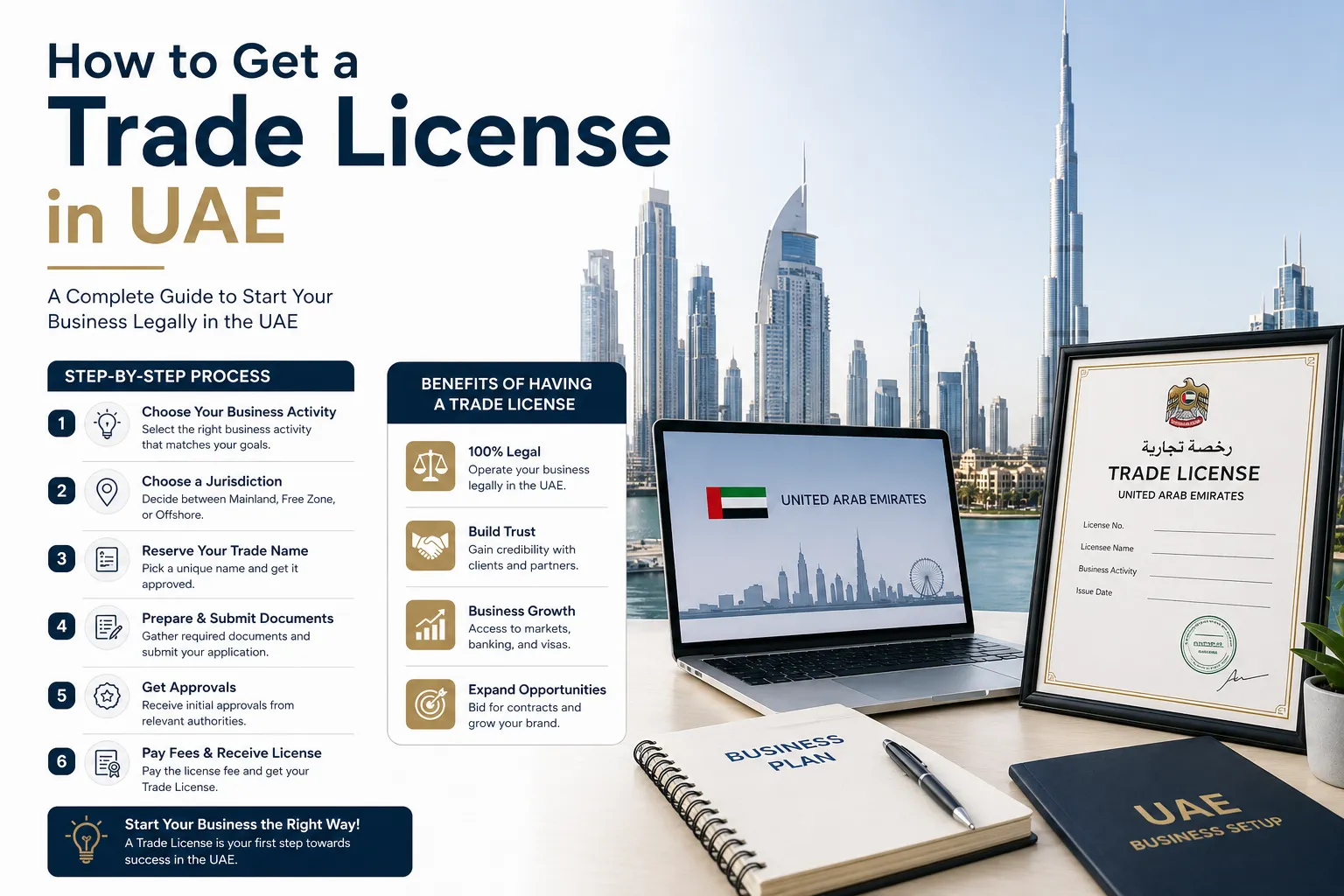
📚 Related Guides on This Site: How to Get a Trade License in UAE
Frequently Asked Questions
How long does it take to open a bank account in Dubai?
For residents, personal accounts can be opened in 1–3 business days at traditional banks. Digital banks like Wio Bank, Liv, and Mashreq Neo open accounts in minutes via their apps. For non-residents, allow 3–7 working days including the required branch visit. Corporate accounts take 2–6 weeks due to compliance and KYC checks.
Can non-residents open a bank account in Dubai?
Yes — non-residents can open a savings account at several UAE banks including Emirates NBD, Mashreq Bank, RAKBANK, HSBC UAE, and First Abu Dhabi Bank. However, a current account requires a UAE residence visa and Emirates ID. Non-residents must visit a branch in person and typically need a minimum balance of AED 25,000–100,000. Mashreq Bank is generally considered the most accessible bank for non-residents in 2026.
What is the minimum salary to open a bank account in Dubai?
The minimum salary requirement varies by bank and account type. For a basic salary or current account, most banks require a minimum monthly salary of AED 3,000. Some banks set this at AED 5,000 for current accounts. Digital banks like Wio Bank, Liv, and Mashreq Neo have zero minimum salary requirements — making them ideal for freelancers and newly employed expats.
What documents are needed to open a bank account in Dubai?
Residents need: a valid passport (original), Emirates ID or application receipt, UAE residence visa, and a salary certificate for salary accounts. Non-residents need: a valid passport with UAE entry stamp, proof of address from their home country (utility bill or bank statement), and 3–6 months of personal bank statements from their home country. For corporate accounts, a trade license, MOA, shareholder passports, and a business plan are also required.
Is opening a bank account in Dubai free?
Yes, opening a bank account in Dubai is completely free. However, you should be aware of ongoing costs: most banks charge a monthly maintenance fee of AED 25–100 if your balance falls below the required minimum. Some accounts have a minimum initial deposit requirement. Digital banks like Wio and Mashreq Neo operate with zero fees and zero minimum balance.
Can I open a Dubai bank account online without visiting a branch?
Residents with an Emirates ID can open accounts completely online through digital banks (Wio, Liv, Mashreq Neo) without visiting a branch — the entire process takes minutes via the app. For traditional banks, an initial branch visit is still required for full KYC verification. Non-residents must visit a branch in person regardless of which bank they choose — there is no fully remote option for non-resident account opening at UAE-regulated banks in 2026.
What is the best bank in Dubai for expats in 2026?
For most expats, the top choices are: Emirates NBD for overall reliability and features, Mashreq Bank for digital banking and ease of non-resident access, HSBC UAE for international transfers and global connectivity, Dubai Islamic Bank for Sharia-compliant banking, and Wio Bank or Mashreq Neo for zero-fee digital-first banking. The best choice depends on your salary level, whether you transfer money internationally, and whether you need a chequebook for rent payments.
What happens if I bounce a cheque in Dubai?
Bouncing a cheque in Dubai is a criminal offense under UAE law — not just a financial penalty. Consequences can include fines starting from AED 1,000, a travel ban preventing you from leaving the UAE, and potential imprisonment. The UAE courts take cheque fraud very seriously. Always ensure funds are fully available before issuing any cheque, especially for rent payments.
Can I open a bank account in Dubai as a tourist?
Yes — tourists with a valid tourist visa and UAE entry stamp can open a non-resident savings account at banks like Mashreq, RAKBANK, and Emirates NBD. You cannot open a current account or get a chequebook as a tourist. You will need to visit a branch in person with your passport, home-country proof of address, and personal bank statements. Be prepared for higher minimum balance requirements (AED 25,000+) compared to resident accounts.
How do I close a bank account in Dubai?
To close a bank account in Dubai, visit your bank branch in person with your passport and Emirates ID. Request an account closure form, withdraw or transfer your remaining balance to zero, and return your debit card and any unused chequebooks. The bank typically processes closure within 3–7 working days and issues a zero-balance confirmation letter. Never abandon an account — continuing fees and credit bureau reports can cause serious problems when you return to the UAE.
Ready to Open Your Dubai Bank Account?
Use this guide to choose the right bank, prepare your documents, and avoid the most common mistakes. Bookmark this page — banking requirements in the UAE are updated regularly, and we keep this guide current.